


Wednesday, July 9th @7:00PM CT
Book Overview
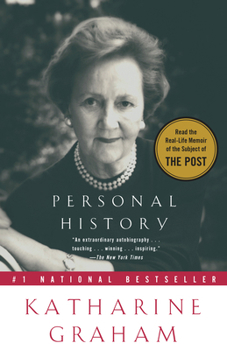
#1 NATIONAL BESTSELLER – PULTIZER PRIZE WINNER – The captivating inside story of the woman who helmed the Washington Postduring one of the most turbulent periods in the history of American media: the scandals of the Pentagon Papers and Watergate
In this widely acclaimed memoir (“Riveting, moving…a wonderful book” The New York Times Book Review), Katharine Graham tells her story–one that is extraordinary both for the events it encompasses and for the courage, candor, and dignity of its telling.
Here is the awkward child who grew up amid material wealth and emotional isolation; the young bride who watched her brilliant, charismatic husband–a confidant to John F. Kennedy and Lyndon Johnson–plunge into the mental illness that would culminate in his suicide. And here is the widow who shook off her grief and insecurity to take on a president and a pressman’s union as she entered the profane boys’ club of the newspaper business.
As timely now as ever, Personal History is an exemplary record of our history and of the woman who played such a shaping role within them, discovering her own strength and sense of self as she confronted–and mastered–the personal and professional crises of her fascinating life.
In this widely acclaimed memoir (“Riveting, moving…a wonderful book” The New York Times Book Review), Katharine Graham tells her story–one that is extraordinary both for the events it encompasses and for the courage, candor, and dignity of its telling.
Here is the awkward child who grew up amid material wealth and emotional isolation; the young bride who watched her brilliant, charismatic husband–a confidant to John F. Kennedy and Lyndon Johnson–plunge into the mental illness that would culminate in his suicide. And here is the widow who shook off her grief and insecurity to take on a president and a pressman’s union as she entered the profane boys’ club of the newspaper business.
As timely now as ever, Personal History is an exemplary record of our history and of the woman who played such a shaping role within them, discovering her own strength and sense of self as she confronted–and mastered–the personal and professional crises of her fascinating life.
Discussion Questions
- Of her father’s passing The Post to his son-in-law rather than to his daughter, Graham notes, “Far from troubling me personally that my father thought of my husband and not me, it pleased me” [p. 149]. Why did Graham and many other women of her generation have this point of view?
- At the time, her father explained that “no man should be in the position of working for his wife” [p. 181]; how would the marriage have been affected if Katharine Graham had been chosen to run The Post?
- Which of the characters did you particularly like or dislike and why? Did any of them spark your interest immediately?
- Of the 3 biggest crises that Kate dealt with in her tenure at The Post (Pentagon Papers, Watergate, and the Pressmen’s Strike) which were the most difficult for her to manage as the newspaper’s leader?
Additional Questions to Consider
-
Philip Graham’s suicide is clearly a turning point in his wife’s story. Is she, in a sense, a different person once she goes to work at The Post? The episode of his mental illness and its aftermath encapsulates many of the recurrent themes in the work, especially the competing obligations Graham felt as a private woman versus a public one. How well does she deal with the exposure that comes with being in such an elevated position? How well does she balance the needs of home and of work? Is this a story of a person who was to find her real fulfillment as a working woman, but who never would have discovered that if she had remained at home?
- In any autobiography some episodes are emphasized while others are muted. What parts of Graham’s life are underplayed in this memoir? Do you sometimes find yourself wanting to know more about certain aspects of her life? What might explain or justify these omissions?
View past and future books from the Reading Room.